Showing posts with label Science-Fiction. Show all posts
Friday, November 2, 2012
Frankenstein (1931)
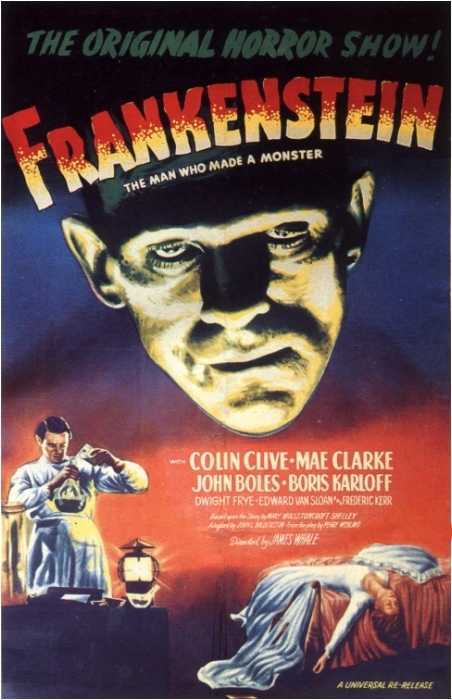
The film opens with a man warning the viewers about the horrifying nature of the film that they are about to see. The 1931 film, Frankenstein, was released to critical praise and box-office success. One of the defining films of the horror genre, it was based (loosely) on the classic novel by Mary Shelley and released following the success of another adaptation of a horror classic: Dracula. The film runs a mere seventy minutes and stars Boris Karloff as the monster and Colin Clive as Dr. Frankenstein.
Dr. Henry Frankenstein and his hunchbacked assistant Fritz (not Igor) rob a grave; in need of a good human brain, Frankenstein proceeds to send Fritz to steal one from the local university. Frankenstein is working on an experiment to see if he can bring life to dead tissue: he is frighteningly optimistic. He has been working for months in an abandoned watchtower far removed from his bride-to-be, family, and friends. His fiancée Elizabeth is worried and enlists the help of his old mentor, Dr. Waldman, to help talk sense into him. They arrive while Frankenstein is undergoing the final preparations for his experiment. The experiment continues on as planned, with the exception of having three horrified onlookers; to the horror of his guests: he is successful. The monster, made with an abnormal brain, is prone to violent outbursts. Frankenstein is appalled by what he has created and makes futile plans with Waldman to destroy it; his subsequent return home is marred by reports of the monster killing Waldman and a little girl. Frankenstein decides to hunt the monster himself, leading to the iconic showdown in an abandoned mill.
Frankenstein is, above all else, a product of its atmosphere; the black-in-white cinematography in tandem with the richly detailed sets provide the ideal Gothic atmosphere for an old-school horror movie. The creation-scene has an assortment of ridiculous gadgets, from a Tesla coil to a bed that can be elevated to the sky, that somehow manage to make sense to the story. The makeup on the actual monster is both frightening and practical; Karloff is able to convey a surprising amount of emotion through the heavy layers. The overall design of the monster, though different from Shelley's vague description, is deservedly famous for such elements as the bolts in the neck and the flat head. The film's actors do exactly what they need to do for the film to work: they ham it up. Colin Clive, as the titular Frankenstein (the film is named after the doctor, not the monster), is both unhinged and obsessed, a perfect combination for the role. Karloff, in his most famous role, is both convincing and frightening as the monster.
In terms of plot, Frankenstein is greatly lacking in both the complexity and the depth present in the novel. The characterization of the monster is the change that has the greatest effect on the story. In the film he is little more than a brute prone to both violence and guttural vocalizations, while in the novel he is highly intelligent and philosophical, driven to violence by cruel rejection. The famous scene involving the little girl is perfectly representative of this change in characterization. In the film he stumbles upon a little girl who treats him with kindness, after a few moments of playing he throws her into the lake, killing her. In the novel, he rescues the little girl from drowning in the lake, only to be shot in the arm by her father. This difference makes the film more cinematic (though I have hopes for a more faithful adaptation sometime in the future) and less thought-provoking.
What makes one human? That question is posed by the film; it does not give an answer, but it does hint at something: the creature is a monstrosity, but Dr. Frankenstein is the true monster. 1931's Frankenstein is a thoroughly entertaining horror film that has held up extremely well, even though it lacks the emotional heft of its literary source-material.
7/10
Note: This review was previously posted on another blog I wrote.
Mad Max (1979)
An empty highway in a dystopian Australia, marked only by the few small settlements alongside it: this is the bleak world that George Miller's 1979 cult classic Mad Max inhabits. One of the great low-budget success stories of all time, Mad Max made a star of Mel Gibson, in his first major as Max Rockatansky (the titular "Mad Max"), a policeman patrolling the barren highway. As one of the films that brought Australian cinema to the attention international audiences, Mad Max spawned two sequels (with a third in development) and has had an immense influence on action films in the years since its release.
The acting in the film is outright cringe-worthy. Most of the actors that performed in the film were unknowns, it should come as no surprise that most of them remained so for the entirety of their careers. Mel Gibson is the only actor that truly does what can be considered "good work." That being said, his acting has greatly improved in the three decades since he made this film and his performance as Max lacks any sense of real nuance. Luckily for George Miller, his film is remembered for the action-scenes that made its reputation and not the "acting" that could easily have given it a totally different one. A (minimal) facet of the film that should have been scrapped was the intensely unnecessary music played every time the police headquarters was shown: I could not help but to think of a corny '70s police procedural (Starsky would agree).
The film's message is a worthy one, inspired by the oil crisis of 1973, and holds ever truer by the day; the possibilities of an oil-starved future become all the more real by the day. Alas, the message is overshadowed by Max's (complicated) exploits on the road. The inspiration for the film is not apparent in the slightest in the finished product (with the exception of a few brief scenes) and I cannot help but feel that if more time was spent explaining why the world was like it was, it would be a much richer film. I must give the filmmakers credit, they craft a (relatively) realistic future that does not bend the limits of believability (Waterworld, why did he have gills? why?).
Overall, Mad Max functions as a good action film, despite its low-budget, but fails as a warning of the possibilities of what our reliance on oil could cause. That is truly a shame, as Mad Max could have been a defining film of the dystopian genre, and not just Mel Gibson's star-making vehicle (a 1974 Ford Falcon, to be precise). The film is great as a mindless action film, but as a cautionary tale: Mad Max is truly underwhelming.
6/10
Note: This review was previously posted on another blog I wrote.
Thursday, November 1, 2012
Superman (1978)
Pure spectacle, and little else, 1978's Superman rode the wave of renewed interest in science-fiction films all of the way to the bank. Directed by Richard Donner, it can be (accurately) deemed the first modern superhero movie and is beloved by many, but not by me. The Man of Steel is played by Christopher Reeve, his costars include Gene Hackman, Marlon Brando, Margot Kidder, Ned Beatty, and Terence Stamp. Wildly influential and iconic, it is difficult to imagine a film that is a better representation of the superhero genre's virtues and limitations.
The film begins with Jor-El (Marlon Brando) of Krypton warning the other Kryptonian leaders of an upcoming planetary disaster; they dismiss him and Jor-El accepts his fate. He does not, however, accept it for his son; he sends him in a spaceship to the planet earth, where he can blend in (in appearance), but not truly belong. He crash lands on earth, and is discovered by a kindly couple living in a small town (Smallville). He grows up as Clark Kent, aware of, but unable to flaunt, his abilities; following his adoptive father's death, he leaves in search of who he is. In the grand superhero tradition, he finds it in a convenient location (a ready-made "fortress of solitude"). Jor-El educates him from beyond the grave, and he becomes Superman. He arrives in the city of Metropolis (New York) and begins to work at the Daily Planet newspaper. He meets, falls in the love with, and embarrasses himself repeatedly in front of his coworker Lois Lane (Margot Kidder). All the while, the sinister Lex Luthor (Gene Hackman) plots to destroy the west coast in an evil plot to make a lot of money off of a manipulated land deal. In many instances, Superman proves himself by saving the day; Lois takes notice (but ignores Clark) and becomes infatuated with Superman (she begins an interview with: Are you married?). As Luthor's plot comes to fruition, the lives of Superman, Lois, and millions of people are put into danger.
The film's story is competent and interesting enough for the film's purposes, but does not truly reach its potential. The first half of the film focuses entirely on the man; his upbringing, his loneliness, his confusion; the second half of the film focuses on the cape. Much of the film sacrifices character development for special effects. This is a fatal flaw that has been repeated countless times in the superhero genre. Superman, as a superhero, is remarkably boring and all but invincible. Superman, as a man, is rife for a proper character study (note: I do not have high hopes for such a thing in the upcoming Zack Snyder reboot) and could be the center of a fascinating movie focusing on the isolation of a man within a crowd. This is not that movie. In fact, I do not believe that I can properly assess Christopher Reeve's performance; the Clark Kent/Superman role in this film requires little more than charisma. Not to put down Reeve's work in the film, it was just what the screenplay required of the character; it is hard to imagine anyone other than Reeve in the role (no cigar, Brandon Routh). Gene Hackman is at his scenery-chewing best as Lex Luthor and the only bad thing to remark about his character is that he deserved more screen-time and a less ridiculous sidekick. Marlon Brando is adequate as Jor-El but the role did not require an actor of his caliber (and he did not deserve the ridiculous salary he recieved). One character that was not given their proper due was Lois Lane: she completely ignores Clark and rudely brushes him off several times. This makes it hard for her to be a likable love-interest and makes it unrealistic that Superman would become so smitten.
The score of the film, composed by John Williams, is grand, rousing, and memorable. The score is perfectly suited to the film and is almost as iconic as the film itself. John Williams, a composer of particular renown for his many memorable scores, composed one of his best in Superman. The film's special-effects are magnificent, groundbreaking, and excessive at times (you can't re-form the San Andreas fault through mere strength, you just can't). The special-effects are now a little dated, but still hold up well enough to not hinder the enjoyment of the film.
Overall, Superman is a fairly enjoyable superhero epic unmatched in terms of influence and scope. The film, though influential, has a shallow screenplay that does not exploit the large amount of potential a film based on the Superman character has. Compared to later films of the superhero genre, such as The Dark Knight and Iron Man; Superman lacks dramatic merit, but it is still wonderful to look at.
5/10
Note: This review was previously posted on another blog I wrote.
Silent Running (1972)
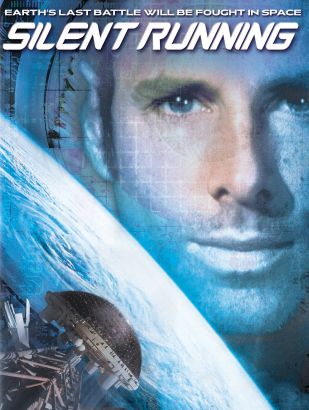
The science-fiction genre has frequently used an environmental catastrophe as a plot device for either social commentary or a hopefully (but not always) rollicking good time at the cinema. Douglas Trumbull's 1972 film Silent Running fits into both of these molds fairly well (one more so than the other), being set on a spaceship tasked with protecting some of the last remaining plants and animals from earth. Bruce Dern headlines the cast as Freeman Lowell, the sole caretaker of the forest, in what is essentially a one man show for most of the film's duration.
The film opens with shots of a beautiful forest seemingly untouched by man, complete with all manner of fauna and flora. It soon becomes clear, however, that the eclectic mix of animal and plant life could never occur naturally and is really located in a bio-dome in space taken care of Freeman Lowell, an environmentalist (potentially the last one alive), determined to reforest the earth. His three companions mock him relentlessly for his dedication and his eating of home-grown food rather than the processed edibles that they consume regularly. New orders arrive from their base ship demanding that the domes are jettisoned and blown up with a nuclear strike, essentially ending all hope of plant life on earth for all time. Lowell is crushed and tries to convince his three colleagues to disobey the order to help him save the forest, this argument soon turns into a violent struggle which ends with all three dead and Lowell alone to find away to save his beloved greenery. He befriends and reprograms three shockingly human robots (Huey, Dewey, and Louie) to help him with his duties (note: they are clearly sentient, yet they operate off of cartridges) while he flees beyond the reaches of the other, now totally deforested ships.
The film's strongest asset is a phenomenal performance by Bruce Dern as a man disconnected from his fellow man due to his separate values, while also desperately trying to be accepted by them. His scenes with the robots were touching as he slowly realizes the magnitude of his actions while never regretting them. Dern's ability to portray a man in the right willing to do wrong, who may or may not be becoming totally unhinged, while concurrently humanizing him, prevents Silent Running from devolving into a piece of pretentious pseudo-intellectual social commentary (though with an important message) via film.
The film's story is interesting, with intriguing implications, though it is not fleshed out nearly enough for the film to become truly memorable. Trumbull's direction is fairly competent, but his roots as a special effects director frequently emerge as shots of the visually impressive bio-dome frequently overshadow character development (it would have made the film more powerful if his three fellow workers were fleshed out more). The two montage sequences in which full songs by Joan Baez played over the action were poorly executed and provided unnecessary tonal shifts that made Silent Running a much more uneven film that it should have been.
Silent Running is, on the whole, a good film marred by a thin plot and frequently uneven direction and elevated by a superb lead performance by Bruce Dern, some breathtaking visuals, and three helpful robots. Silent Running's influence on later science-fiction films (such as Duncan Jones' Moon) can also be clearly seen, making it an interesting watch for fans of the genre. Though it is hardly required viewing, the environmental message is as relevant today as it was when the film was made and Dern's performance alone makes it a worthwhile venture.
6/10
Note: This review was previously posted on another blog I wrote.
Subscribe to:
Posts (Atom)